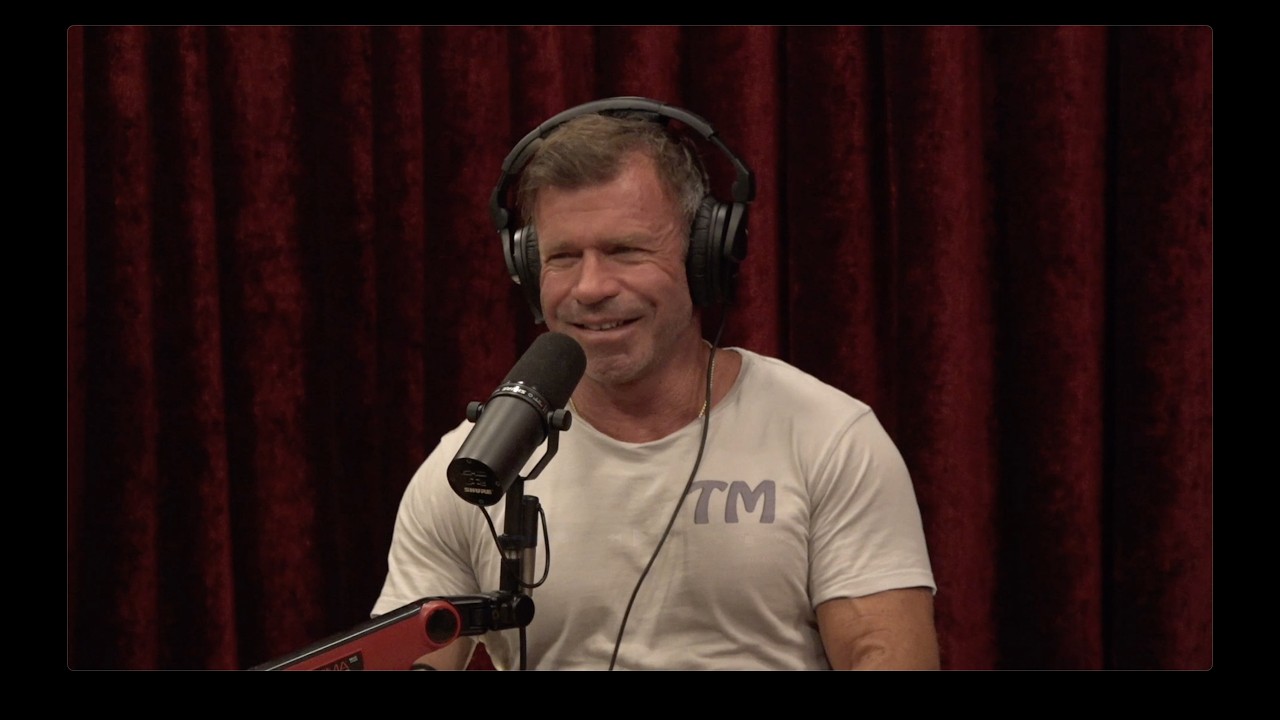


The Joe Rogan Experience #2518 Tim Dillon episode is exactly the kind of JRE conversation that either makes fans hit play immediately or makes critics roll their eyes before the first ad break. It is loose, loud, funny, conspiratorial, cynical, occasionally insightful, occasionally reckless, and very much built around the specific chemistry between Joe Rogan and Tim Dillon. The episode is listed as #2518 – Tim Dillon on Spotify and Apple Podcasts, with Apple showing a runtime of 2h 45m and describing Dillon as a stand-up comic, actor, and host of The Tim Dillon Show. The uploaded transcript shows a sprawling conversation that moves from cigarettes and Buc-ee’s to Los Angeles decline, UK speech policing, grooming gang scandals, immigration, AI, digital gods, corporate Pride branding, DMT, UFOs, Iran, Israel, Trump, JD Vance, Michelle Obama, and the future of American politics.
Episode at a glance
| Detail | Information |
|---|---|
| Podcast | The Joe Rogan Experience |
| Episode | #2518 – Tim Dillon |
| Host | Joe Rogan |
| Guest | Tim Dillon |
| Platforms | YouTube, Spotify, Apple Podcasts |
| Runtime | Around 2h45m on Apple Podcasts |
| Main format | Long-form comedy, politics, culture, current events |
| Main themes | AI anxiety, social collapse, immigration, free speech, Hollywood decline, DMT, Iran, Israel, American politics |
| Best for | JRE fans, Tim Dillon listeners, comedy podcast fans, people following current political podcast discourse |
| Caution | The episode contains sweeping political claims, dark comedy, and controversial opinions that deserve context rather than blind acceptance |
Why this podcast episode is getting attention
Tim Dillon is one of the guests who fits Rogan’s studio almost too well. He can riff at speed, turn a bleak news story into a grotesque joke, then pivot into something that sounds like a half-serious political thesis. Rogan, for his part, gives him room. He does not interview Dillon so much as wind him up and let him go.
This episode is also timely. It dropped into a news environment already full of arguments about AI, war, immigration, social trust, free speech, and whether American institutions still work. The official Apple Podcasts listing identifies The Joe Rogan Experience as “the official podcast of comedian Joe Rogan” and shows the Dillon episode as the latest release at the time of checking. On Spotify, the episode is likewise listed as #2518 – Tim Dillon and published today.
Early online discussion was immediate: a Reddit thread for Joe Rogan Experience #2518 – Tim Dillon appeared the same day the episode was released, which is usually a sign that JRE’s core audience is already dissecting the appearance in real time. But because the episode is brand new, it is too early to make firm claims about long-term listener reaction, rankings, or whether it will become one of Dillon’s most replayed JRE appearances.
Detailed episode summary
The opening: cigarettes, America, and the comedy of bad habits
The episode begins with a deceptively small topic: cigarettes. Rogan and Dillon talk about smoking, image, addiction, and the strange cultural power of a product that everyone knows is harmful. Dillon frames cigarettes as one of the most effective consumer products ever created because warnings, rising prices, and social stigma still have not completely erased the appeal.
From there, the conversation widens into food culture, Europe, American portion sizes, and the surreal scale of places like Buc-ee’s. Rogan and Dillon use Buc-ee’s as shorthand for a particular version of America: enormous, convenient, absurd, excessive, and almost theme-park-like. Dillon’s point is not really about gas stations. It is about the bewildering shock of American abundance when viewed from outside.
That is one of the episode’s recurring moves. A joke about a cigarette becomes a comment about capitalism. A joke about unlimited refills becomes a comment about national character. A joke about mayonnaise buckets becomes a comment about American paranoia.
Los Angeles decline and Hollywood as “the sequel”
The first major serious thread is Los Angeles. Rogan talks about fires, riots, evacuation, and why he once wanted a “bugout” vehicle while living in California. Dillon expands this into a broader argument about LA becoming a faded sequel to itself.
The pair discuss Hollywood’s cultural decline, production leaving California, and the sense that Los Angeles still trades on an older myth of itself. That argument lines up with real industry anxiety. FilmLA reported that Greater Los Angeles on-location production totaled 19,694 shoot days in 2025, down 16.1% from 2024, even though there were signs of tax-credit-supported momentum late in the year.
Dillon’s best line of argument here is not that Los Angeles is finished. It is that LA’s self-image may be dangerously out of date. Rogan adds the familiar JRE angle: regulation, taxes, crime, and political denial. Together, they create a picture of a city still rich in weather, history, and symbolic power, but no longer as inevitable as it once seemed.
Free speech, the UK, and policing online speech
The episode then turns toward the UK and online speech. Rogan and Dillon discuss arrests, retweets, likes, immigration debates, and the idea that Western governments increasingly police not only actions but language and tone.
This part of the conversation needs context. The UK Home Office announced on March 31, 2026 that non-crime hate incidents would be scrapped, saying police should stop recording “everyday rows and online spats” and avoid policing lawful speech while still responding to genuine harm. That official move supports the general idea that UK authorities recognized a problem with overbroad recording or investigation practices. It does not automatically prove every claim made in the episode, but it does show why the topic is active and politically charged.
Dillon’s framing is classic Tim Dillon: the state does not merely enforce rules; it defines acceptable reality. Rogan responds from his usual free-speech position, treating speech policing as a warning sign for what could happen elsewhere.
This section will likely split listeners. Fans who already worry about censorship will hear it as common sense. Critics will hear it as oversimplified culture-war panic. The truth is that the episode does not slow down long enough to carefully distinguish between offensive speech, incitement, hate crime, police recording practices, and actual prosecution. That lack of precision is part of the entertainment, but it is also the weakness.
Immigration, grooming gangs, and social trust
The most controversial section concerns immigration, cultural integration, and UK grooming gang scandals. Dillon argues that countries cannot rapidly alter their demographic and cultural makeup without social backlash, especially when ordinary citizens feel they were never consulted.
There is a real policy background here. The UK government’s National Audit on Group-based Child Sexual Exploitation and Abuse, carried out by Baroness Casey, was commissioned by the Prime Minister and Home Secretary and examined scale, characteristics, ethnicity and culture, and institutional responses to group-based child sexual exploitation. The statutory grooming gangs inquiry has also named London, Oldham, Bradford, and Keighley among its first areas of focus, according to recent reporting.
The episode, however, handles this topic in the blunt, emotionally charged style of a comedy podcast, not a public inquiry. Dillon and Rogan mix real institutional failures with sweeping claims about immigration, culture, and national sovereignty. That makes the section compelling but uneven.
The strongest version of their point is about trust: when institutions appear to suppress uncomfortable facts, public trust collapses. The weaker version is when broad social conclusions are drawn too quickly from horrific but specific cases. A better version of this conversation would have separated child-protection failures, offender data, migration policy, and cultural integration into distinct subjects. Instead, the episode compresses them into one long argument about elites, denial, and backlash.
AI, homeownership, and the “digital god”
One of the most interesting parts of Joe Rogan Experience #2518 Tim Dillon is the AI discussion. Dillon argues that society is being prepared for a future in which many people will not own homes, will not have stable careers, and will be pushed into dependence on systems they do not control. Rogan pushes the conversation toward the possibility of AI becoming vastly more intelligent than humans.
This is not just sci-fi podcast filler. The International Monetary Fund has warned that nearly 40% of global jobs are exposed to AI-driven change, with concerns about displacement and entry-level opportunities becoming more acute. The episode’s paranoia is exaggerated, but the underlying anxiety is mainstream: AI is no longer a niche tech subject. It is now a labor-market, political, educational, and cultural subject.
Dillon’s phraseology around people “building a god” captures the emotional charge of the issue. He is not offering a technical AI policy framework. He is describing the psychological weirdness of billionaires, defense contractors, tech founders, and politicians all circling a technology that ordinary people are expected to trust but cannot meaningfully control.
Rogan’s contribution is more existential. He wonders what happens if AI becomes too smart to be governed by people, and whether human systems—rail projects, bureaucracies, elections, infrastructure—will look absurd to a machine intelligence. That is classic Rogan territory: part stoner philosophy, part real concern, part speculative monologue.
Social media anxiety and the end of normal life
Another strong thread is the effect of digital life on anxiety. Rogan suggests that if anxiety levels could be measured historically, they would likely rise with the internet and spike with social media. Dillon adds that people now feel pressured to have opinions on every horror in the world.
This is one of the episode’s most relatable sections because it is less partisan. The point is simple: people are not built to process global catastrophe, moral judgment, personal branding, political signaling, and social ranking all day through a glowing rectangle.
Dillon is especially sharp when talking about people who cannot think outside institutional approval. He mocks a class of adults who wait for the correct university, nonprofit, board, or media source to tell them what their position should be. The critique is harsh, but it captures a real cultural exhaustion: many people are tired of being asked to perform moral clarity about everything.
Corporate Pride, identity politics, and the Scientology analogy
The episode’s section on corporate Pride branding is one of Dillon’s most recognizably comic passages. He asks, in effect, why every corporation needs an identity. Why does a bank need to be “gay”? Why does a yogurt brand need a politics? Why does every institution have to participate in symbolic alignment?
Dillon’s argument is not framed as a policy argument. It is framed as annoyance with aesthetic politics. His Scientology analogy is deliberately absurd: he says that if his bank turned into a month-long Scientology display, he would find that excessive too. The point is that corporate moral branding can feel intrusive even to people who support individual freedom.
This is where Dillon’s identity as an openly gay comic gives the rant a different texture. He is not arguing from a standard conservative outsider position. He is arguing as someone irritated by what he sees as symbolic corporate performance that may make some people feel seen but may also provoke backlash.
Whether listeners agree or not, it is one of the more coherent comedic arguments in the episode: live-and-let-live tolerance is different from mandatory brand-page morality.
Cancel culture, Armie Hammer, and the limits of public disgust
Dillon and Rogan briefly discuss Armie Hammer and comeback culture. Dillon’s riff is dark, provocative, and intentionally uncomfortable. His broader point is that cancellation is rarely permanent if the public remains curious and the person retains some entertainment value.
This section is less analytically serious than the AI or free speech segments, but it fits the episode’s worldview. Dillon is interested in the gap between public morality and private appetite. People say they want clean institutions, but they also click on scandals, watch comebacks, and remain fascinated by damaged celebrities.
The best way to understand this section is not as a defense of any particular celebrity. It is Dillon poking at the entertainment industry’s hypocrisy: audiences condemn, then consume; platforms distance themselves, then monetize curiosity.
General Butt Naked and the comedy of extreme human history
One of the strangest detours in the episode is Rogan’s story about General Butt Naked, the Liberian warlord later associated with Christian conversion. It is grotesque, surreal, and tonally jarring, but it also serves a purpose in the conversation.
Rogan and Dillon are using the story to argue that much of the world is far more chaotic than the protected Western middle-class bubble imagines. Their point is that Western societies often debate policy in sanitized language while ignoring how violent, fragile, and strange human life can be elsewhere.
As with many JRE tangents, the risk is that the story becomes spectacle. The value is that it jolts the conversation out of domestic culture-war routine and into a darker question: how much of modern civilization depends on people forgetting what disorder looks like?
DMT, entities, and mapping the psychedelic experience
The DMT section is one of the most classically Rogan parts of the episode. Rogan discusses extended DMT experiences, entities, jesters, and the possibility that recurring psychedelic visions might be mapped or studied.
There is real research-adjacent context here. The DMTx Project describes an approach using target-controlled IV infusion to stabilize DMT in the bloodstream and extend the experience beyond the usual short duration. Coverage of Andrew Gallimore’s work has also discussed attempts to study perceived encounters with entities during extended-state DMT sessions.
Rogan’s personal account of seeing jesters who seem to mock his ego is one of the episode’s more revealing moments. It cuts through the politics. Underneath the AI panic, free speech anxiety, and civilizational dread, Rogan is still fascinated by altered states as tools for humility. Dillon, meanwhile, reacts with comic fear. He jokes about going into DMT and encountering political figures yelling at him.
This section works because it lets both men be themselves: Rogan as the psychedelic explorer, Dillon as the terrified satirist who turns transcendence into a nightmare sketch.
UFOs, drones, and “Jamie, pull that up” epistemology
The episode also drifts into UFOs, drones, government secrecy, AI searches, and the difficulty of knowing what is real. This is not the tightest section, but it captures a core JRE habit: the show often becomes a live experiment in informal knowledge-making.
Rogan asks for things to be looked up. Dillon riffs while the facts are being assembled. The conversation moves before the evidence fully settles. That can be entertaining, but it is also why JRE can frustrate listeners who want rigor. The show is built around curiosity, not verification. Sometimes that curiosity lands on something important. Sometimes it creates a fog of half-confirmed claims.
Iran, Israel, Trump, and the new anti-war right
The later political sections focus heavily on Iran, Israel, Trump, JD Vance, Marco Rubio, and the possibility that parts of the American right are changing on foreign policy. This part is especially current. Reuters reported on June 24, 2026 that the U.S. was seeking Gulf support for Trump’s initial peace deal with Iran, while Israel continued to resist withdrawal from southern Lebanon. Reuters also reported that the U.S.-Iran pact could leave Benjamin Netanyahu politically weakened.
Dillon’s view is that America is not “winning” the Iran conflict in any clean narrative sense, and that the political coalition around Trump is internally divided between interventionist forces, donors, populist anti-war voices, and newer figures like JD Vance.
The episode does not offer a neat geopolitical analysis. It offers a snapshot of how these issues are being processed inside the Rogan-Dillon media universe: skepticism toward war, suspicion of donors, distrust of official narratives, and fascination with whether Trump can break with older Republican foreign policy habits.
The 2028 speculation: Michelle Obama, Jon Ossoff, and political exhaustion
Near the end, Rogan and Dillon move into speculation about future Democratic politics. Michelle Obama comes up. Jon Ossoff comes up. Gavin Newsom comes up. The mood is not analytical so much as exhausted.
Dillon suggests that America may eventually want a boring politician again. After years of chaos, spectacle, assassination attempts, war scares, and media panic, the country may simply want someone who can appear normal.
This is one of Dillon’s smarter instincts. He understands politics as entertainment, but he also understands entertainment fatigue. Trump is described almost like a drug: thrilling, destabilizing, addictive, and exhausting. Dillon’s argument is that eventually people detox.
Host and guest dynamic: why Rogan and Dillon work together
The Rogan-Dillon dynamic works because both men share a distrust of official narratives, but they arrive there through different temperaments.
Rogan is earnest. He asks big questions and often means them literally. He wants to know whether AI becomes God, whether DMT entities are real, whether governments are hiding UFO evidence, whether California can recover, and whether speech laws are sliding toward authoritarianism.
Dillon is theatrical. He often does not need a claim to be fully true to make it comedically useful. He talks like a man doing stand-up inside a collapsing empire, narrating the fall while ordering room service. His worldview is cynical, but his timing keeps it from becoming pure doom.
That combination gives the episode energy. Rogan supplies wonder and alarm. Dillon supplies contempt and punchlines. When it works, the result is funny and weirdly perceptive. When it fails, it becomes two men escalating each other’s suspicions without enough friction.
Background on Tim Dillon
Tim Dillon is a stand-up comic, actor, and host of The Tim Dillon Show. Apple’s listing for this JRE episode notes that his latest comedy special, Tim Dillon: I’m Your Mother, is available on Netflix. Netflix describes that special as Dillon delivering edgy comedic rants on topics ranging from homelessness to the British royal family.
Dillon’s comedy persona is built around American decline, scams, luxury, fake morality, political rot, and the absurdity of elite culture. He is not simply a political comic. He is a comic of corruption. His best material often sounds like a man who has accepted that everything is fake but still wants a nice hotel suite.
That makes him a strong JRE guest because Rogan’s show thrives on guests who can move between jokes, conspiracy, politics, and personal confession without needing a rigid structure.
Background on The Joe Rogan Experience
The Joe Rogan Experience remains one of the most influential long-form podcasts in the world. Apple Podcasts lists it as the official podcast of comedian Joe Rogan and shows it as updated semiweekly. Its format is simple but durable: long, lightly structured conversations with comedians, fighters, scientists, authors, politicians, journalists, and cultural figures.
The show’s power is not just audience size. It is duration. Guests get hours, not minutes. That means ideas can breathe, but it also means weak claims can drift a long way before being challenged. Episode #2518 is a perfect example of both sides of the format.
What works best in the episode
The best parts of Joe Rogan Experience #2518 Tim Dillon are the sections where comedy and cultural observation fuse.
The cigarette opening works because it is small and specific. The LA decline discussion works because it connects personal experience to a real industry shift. The AI discussion works because it captures a fear many people feel but struggle to articulate. The DMT section works because it is strange, personal, and unmistakably JRE.
Dillon is strongest when he is diagnosing the emotional atmosphere of a moment: distrust, fatigue, status anxiety, institutional obedience, fake virtue, and the creeping feeling that nobody normal is in charge.
Rogan is strongest when he keeps asking open-ended questions rather than locking into a position too early.
What could have been stronger
The episode’s biggest weakness is the lack of separation between verified facts, political interpretation, comedy, and speculation.
That is not new for JRE or Dillon, but it matters more when the subjects are immigration, child sexual exploitation, war, and religious or ethnic tension. The episode often moves from “there is a real scandal” to “this proves a much larger theory” too quickly. That may make for gripping podcasting, but it leaves readers and listeners responsible for doing their own fact-checking afterward.
The free speech section would have benefited from clearer distinctions between legal speech, offensive speech, incitement, police recording, and prosecution. The immigration section would have benefited from more precision around data, geography, and policy. The Iran section would have benefited from a clearer timeline.
Still, expecting this episode to behave like a policy seminar misses the point. It is a Tim Dillon JRE appearance. The engine is comic exaggeration plus civilizational dread.
Who should listen to this episode?
Listen to this episode if you enjoy long, chaotic, politically charged comedy conversations. It is especially worthwhile for fans of Tim Dillon’s podcast, regular JRE listeners, and anyone interested in how major podcast personalities are talking about AI, free speech, immigration, and war in 2026.
Skip it if you want a careful, balanced policy breakdown. This is not that. It is a conversation that throws sparks. Some illuminate; some just burn the furniture.
Final verdict: does JRE #2518 deserve attention?
Yes, Joe Rogan Experience #2518 with Tim Dillon deserves attention, especially for PodcastCharts.net readers tracking the week’s most discussed podcast episodes. It is not the cleanest, most disciplined, or most factual episode of JRE. But it is alive. It captures a mood: distrustful, overstimulated, politically exhausted, spiritually curious, technologically anxious, and still desperate to laugh.
The episode matters because it shows why Rogan and Dillon remain compelling together. They are not offering solutions. They are performing the emotional weather of a strange moment: AI rising, institutions wobbling, war narratives shifting, speech rules changing, and comedy trying to make sense of it all before the next crisis arrives.
FAQ
What is Joe Rogan Experience #2518 about?
It is a long-form conversation between Joe Rogan and Tim Dillon covering comedy, cigarettes, LA decline, UK free speech debates, immigration, AI, DMT, UFOs, Iran, Israel, Trump, and American politics.
Who is the guest on JRE #2518?
The guest is Tim Dillon, a stand-up comic, actor, and host of The Tim Dillon Show.
How long is the Joe Rogan Tim Dillon episode?
Apple Podcasts lists the episode at 2h 45m.
Where can you watch or listen to JRE #2518?
The episode is available on YouTube, Spotify, and Apple Podcasts. Spotify lists it as #2518 – Tim Dillon.
Is Joe Rogan Experience #2518 worth listening to?
Yes, if you like Tim Dillon’s dark political comedy and Rogan’s long-form conversational style. It is less useful as a factual guide than as a cultural snapshot.
What are the best moments in the episode?
The strongest sections are the LA decline discussion, the AI “digital god” conversation, Dillon’s corporate Pride rant, the social media anxiety segment, and Rogan’s DMT stories.
What does Tim Dillon say about AI?
Dillon frames AI as part of a larger future where homeownership, stable jobs, and personal autonomy may become harder for ordinary people. Rogan pushes the topic toward machine intelligence and the possibility of AI becoming vastly smarter than humans.
Does the episode discuss immigration?
Yes. Dillon and Rogan discuss immigration, cultural integration, the UK, Ireland, grooming gang scandals, and institutional trust. This is one of the episode’s most controversial sections.
Does the episode discuss DMT?
Yes. Rogan talks about DMT, extended-state DMT research, entities, jesters, and the idea of mapping psychedelic experiences.
Why is this Tim Dillon episode trending?
It is a new JRE episode featuring a repeat guest with a large podcast audience, and it touches several hot topics: AI, free speech, immigration, war, and American political fatigue.